
Universal News Media, Published on http://www.YouTube.com on March 17, 2018

Good afternoon. This is Universal News Media. Today is March 17, 2018. Today, we will be viewing images from unedited photos obtained yesterday from the Federal Aviation Weather-cams scattered across Alaska and Canada. All videos are in time lapsed mode with each frame equal to ten minutes.

Our first image was viewed by the South facing weather-cam in Ogden, Alaska. We are starting to see the stripped planet frequently as it gets closer and larger.

In Baro, Alaska from the Southwest facing Weather-cam not much appears to be going on, but notice the tiny white dot.
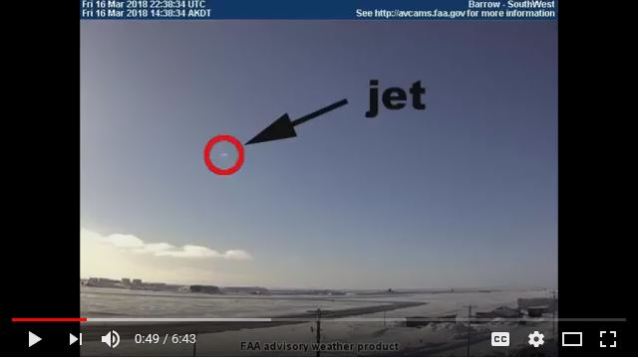
That’s the concealment jet that the oddly shaped reflections to swing across the screen. Which we will see in a moment. Just in case anyone doesn’t see the Jet here’s an arrow pointing to it. The jet carefully follows the planet that the Sun will be eclipsing shortly.
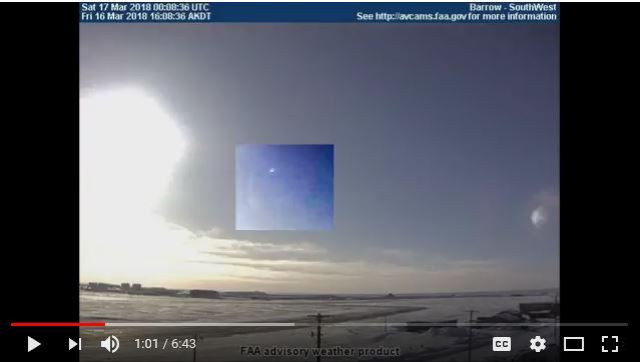
The planet is nearly transparent in the Atmosphere chemicals, but some contrast brings it into view. Also notice the jets reflection coming onto the screen from the lower right edge. The jet follows the planet sending signals to the Sun Simulator prior to an Eclipse.
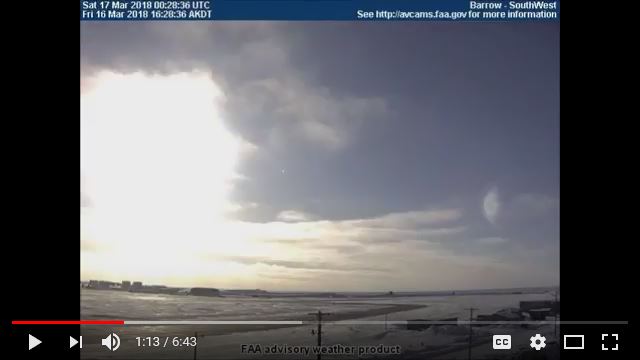

For those who are new to this channel I’ll quickly explain the Sun Simulator. It’s a very intense light source installed between the Earth and the Sun. Much closer to the Earth planets involved in the many Eclipses occurring daily pass in front of our real Sun, but behind the Sun Simulator. So, it in obvious when an Eclipse is occurring we know that the Sun Simulator moves across the sky viewed from this Weather-cam in Drama, Alberto, Canada. It completely disappears behind a tiny street light. Most first-graders know our real Sun could never be hidden by a tiny object like this.

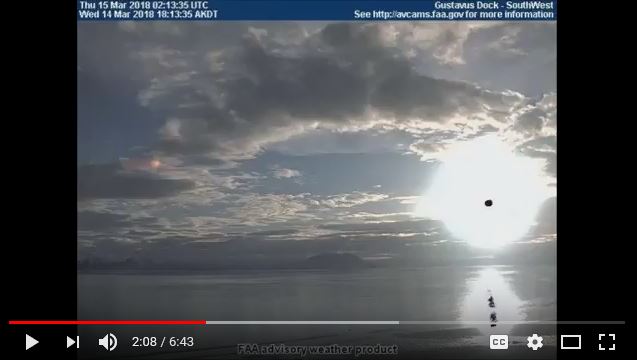
The Sun Simulator often has a black center, but not always. Depending on what mode it is in and what angle it is being viewed. This black dot is not a camera anomaly. It casts its own reflection upon the water as shown in these images from the Southwest facing Weather-cam in Cavastock, Alaska.

The Southeast facing Weather-cam in Bucklan, Alaska captured the stripped planet. It is difficult to see without some contrast enhancement.

The Southwest facing Weather-cam in Chandlier Shelf, Alaska caught the gigantic tan colored planet that is often seen on another Alaska camera. Barely visible it is nearly transparent in the Atmospheric chemicals.
The Sun Simulator also has a blurring mechanism often applied when there are nearby celestial objects. But as the Sun moves closer to this enormous object its tan color becomes more pronounced. Even though it is still blurred. Moving the frames back and forth a bit does make it more obvious that something large and tan colored is over the horizon getting ready to set.
As the Sun gets closer to the tan colored object the Sun Simulator’s glare stretches toward the tan orb in a further attempt to conceal it.
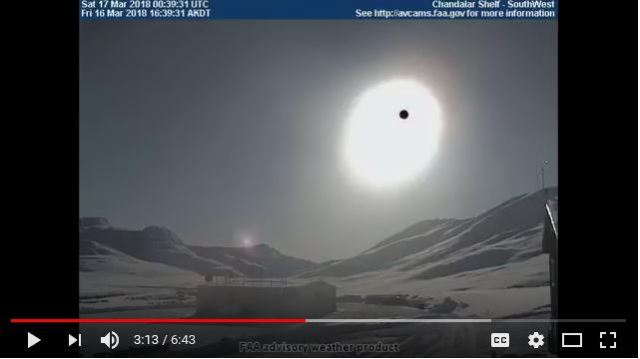
This huge object sets to the left of or Sun every evening causing a very red sky to the left of the real Sun. I don’t know about other U.S. states, but in Ohio the sky is very heavily Chem-trailed at Sunset to the left and to the right of the Sun. And often over the Sun itself.

The Southeast facing Weather-cam from Chavoc, Alasks shows the stripped planet again. It quickly fades into a transparency from the Atmospheric chemicals.

Once again here we see the red fast rotating crater-pocked planet rolling through the sky from the Southwest facing Weather-cam in Cuffling Cove, Alaska.

The Southwest facing Weather-cam in Craig, Alaska shows the Sun eclipsing a large planet with a very large crater hole in it. The contrast enhanced pictures shows the planet and its detail much better.
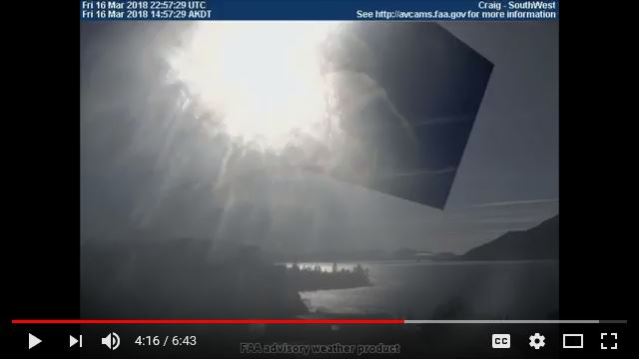
And in the last contrast photo its obvious that there are two planets.

Here again is the red fast rotating planet that we see on many Weather-cam’s throughout Alaska and Canada. This one is the Southeast facing camera in Craig, Alaska.
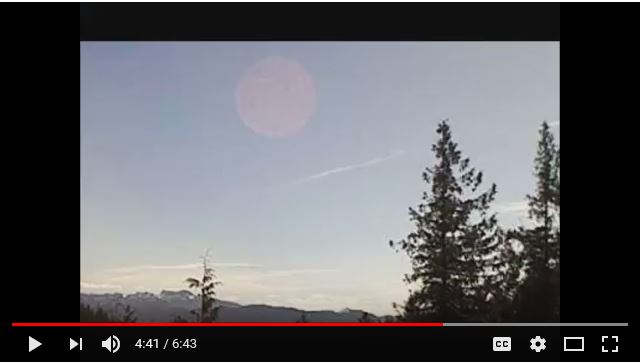
This same planet is very view-able from the South facing Weather-cam in Edna Bay, Alaska. Chem-trails cross in front of it, but fail to hide it from view. A closeup shows the many craters on this planet.
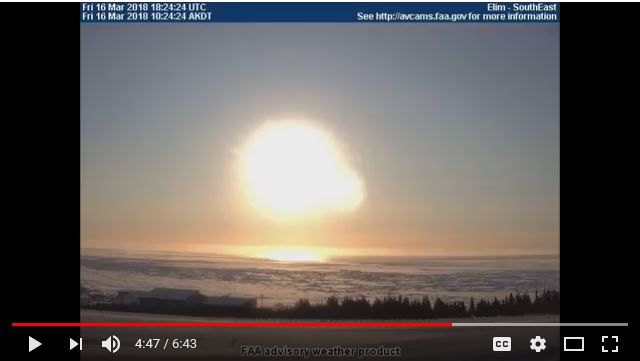
In Elin, Alaska the Sun took on a very odd shape for at least 10 minutes in one frame.

In Fort Yukon, Alaska the Sun appeared as the shape of an Anvil from the South facing Weather-cam we saw this. Even covered with clouds the Anvil shape is still there.

The Northwest facing Weather-cam in Torque, Alaska shows a very fast rotating colorful, stripped planet. After a few frames the red planet comes into view also.
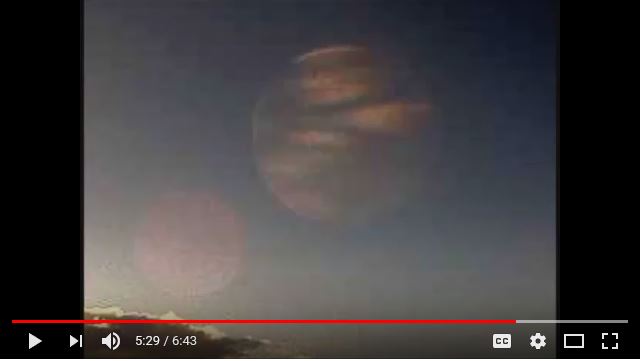
Some contrast is added to these enlargements in order to see the details of the planets better. It’s stripped in rotation really show up in a couple of frames. Showing how fast this object is rotating.
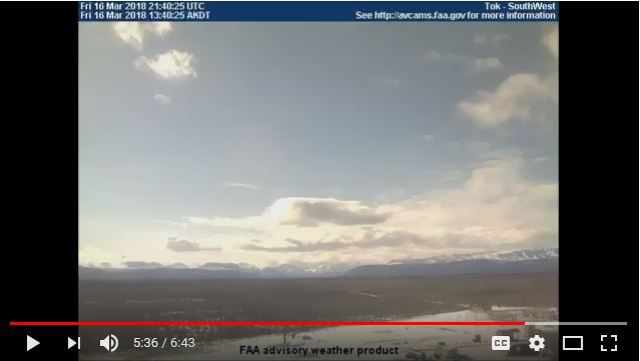
The red planet is once again captured on the Torque, Alaska Southwest camera. These objects we have just viewed are part of an approaching celestial system.
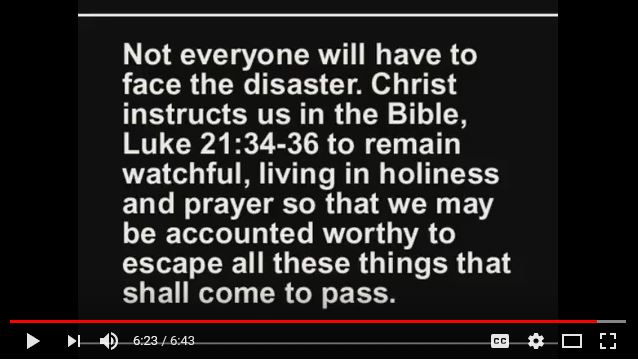
Many people ask when the system will make it’s closest pass to our Earth. A general indication of time is provided in the following screens of text. Please don’t forget to like this video and subscribe.


 Learn Biblical