
Today’s Front Page
Today, The Bible & You
The Nation’s Christian Newspaper
April 2026
Where Do Unforgiven Sinners
Go After Death?
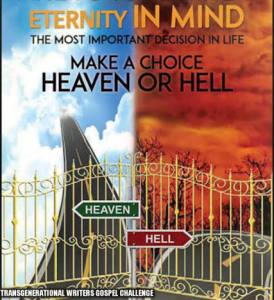
What if I told you that the moment your heart stops beating, your eternal destination has already been determined—not just whether you believed, but by how you believed, what you did, and who you truly served? Now, I know that sounds intense, but stay with me, because what I’m about to reveal to you is going to challenge everything you thought you knew about hell and eternity. See, most people think hell is just one big burning pit where everyone who didn’t make it to heaven suffers the same fate. But here’s what they don’t tell you in Sunday school; here’s what most pastors avoid preaching about because it makes people uncomfortable: The Bible actually describes seven distinct levels of hell. Seven different compartments, each one designed for specific types of sinners, each one with its own horrifying characteristics, and the level you end up in depends entirely on what you did with the truth God gave you.
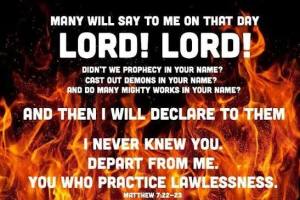
Right now, sitting in churches all across America, there are people who have no idea they’re heading straight to one of these levels. They sing the worship songs, they raise their hands during praise, they post Bible verses on social media, but Jesus himself warned that many who cry out “Lord, Lord,” will hear the most terrifying words ever spoken: “I never knew you; depart from me, you evildoers.” Think about that for a second. These aren’t atheists Jesus is talking about; these aren’t people who openly rejected God. In Matthew 7, Jesus describes people who prophesied in his name, who cast out demons in his name, who performed miracles in his name, and yet they still hear those bone-chilling words: “I never knew you.” So here’s the question that should be burning right now: If people who performed miracles in Jesus’s name can still end up separated from God forever, where does that leave you? Where does that leave me?
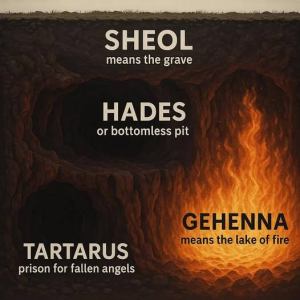
For centuries, the church has oversimplified hell into a single concept—one lake of fire where all the unbelievers go. But when you actually dig into the original Hebrew and Greek texts, when you study what Jesus himself taught about the afterlife, and when you examine the visions that were given to the apostles, a completely different picture emerges. The Bible uses at least five different words to describe the realm of the dead: Sheol, Hades, Gehenna, Tartarus, and the Lake of Fire. And here’s what’s going to blow you mind: These aren’t just five different names for the same place; they’re five different locations with different purposes and different inhabitants. Why would Jesus, who was the most precise teacher who ever lived, use different words to describe eternal punishment if it was all the same experience? The answer is this: God’s justice is perfectly calibrated. The person who rejected Christ after hearing the gospel preached to them over and over again faces a different fate than someone who never heard the message at all.

We’ve established that hell has seven distinct levels, but how do you know which one you’re heading toward? Jesus gave us a test—the kind that reveals the true condition of your soul and strips away all religious performance. In Matthew 7, Jesus drops this bombshell: “Not everyone who says to me ‘Lord, Lord will enter the kingdom of heaven, but only the one who does the will of my Father who is in heaven.” These people operated in supernatural power, yet Jesus calls them evildoers because there was never a real relationship. He says, “I never knew you.” This means there was never a genuine connection. When He says “Away from me,” He’s referring to a specific place the Bible calls the Outer Darkness. Jesus mentions outer darkness three different times in the Gospel of Matthew. It is a place of complete isolation—not just the absence of physical light, but the absolute absence of God’s presence. It is specifically reserved for religious people who thought their church membership would save them, but never truly submitted to his lordship.
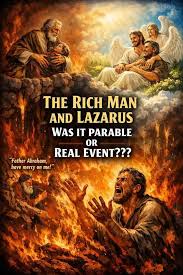
Now, let’s look at one of the most disturbing passages Jesus ever taught: the account of the rich man and Lazarus in Luke chapter 16. This isn’t a parable; it’s a real account. The rich man woke up in torment in a place called Hades. He was fully conscious, could feel, think, and remember. He begged for just one drop of water, but Abraham told him that between them a great chasm has been set in place, making it impossible for anyone to cross over. This place of torment is the intermediate state where unbelievers go immediately after death to await final judgment. The flames are already burning, and the separation is already absolute.
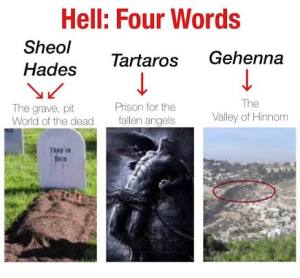
Then there is Gehenna. In English, your Bible probably translates it as hell, but Gehenna was a real geographical location outside Jerusalem—the Valley of Hinnom. Its history is stained with the evil of child sacrifice to the god Molech. By Jesus’s time, it was the city’s garbage dump where fires burned constantly. Jesus used Gehenna as the ultimate warning for specific sins: hypocrisy, false teaching, and harboring murderous hatred while maintaining a religious facade. It is the destination for those who know the truth and corrupt it—the trash heap of eternity where the fire is unquenchable, and the worm does not die.
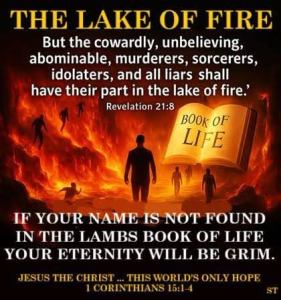
We then reach the final destination: The Lake of Fire. This is the Second Death, and it’s far worse than anything else. In Revelation 20, John sees the final judgment where death and Hades are thrown into the lake of fire. Anyone whose name was not found written in the Book of Life was thrown there as well. It is a place of eternal torment prepared for the devil and his angels, but humans who reject salvation choose this destination. It is described as burning with sulfur, an eternity of suffering that never diminishes.
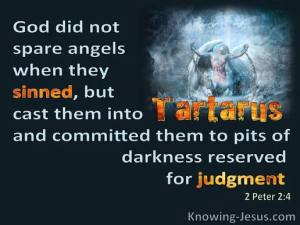
Finally, there is a place so mysterious that even demons tremble: The Abyss. Also known as Tartarus in 2nd Peter 2:4, it is a prison specifically designed for fallen angels who committed grievous sins, such as those described in Genesis 6. It is a bottomless pit of darkness. But here is the critical truth: Jesus Christ holds the keys to the Abyss, to Death, and to Hades. He has all authority.
In conclusion, every level of hell is under the dominion of Jesus. He descended into the lower earthly regions, invaded the kingdom of darkness, and proclaimed victory. He holds the keys because He died to set you free. The wages of sin is death, but the gift of God is eternal life in Christ Jesus. You must choose now, while you still have breath. Standing firm in the Word of God is what protects you from every level of hell. If you surrender your life to Him, your name is written in the Book of Life, and your destination changes from torment to glory. Jesus conquered them all.
Printed with permission of Today, The Bible & You, located at P.O. Box 1722, Broken Arrow, Oklahoma 74013, Phone Number (918) 279-1136, the name of the original article in the April 2026 issue of Today’s Front Page was “Where Do Unforgiven Sinners Go After Death?” www.JohnBarela.com
 Learn Biblical